 Add to Chrome
 Add to Firefox
 Add to Edge
LLM-Guided Future Hypotheses for Horizon-Aware Exploration in Multi-Step Robot Manipulation
May 28, 2026
Multi-step robot manipulation requires acting under uncertainty about how the scene will evolve, making exploration and policy adaptation challenging. We study whether short-horizon, task-consistent future videos can provide useful structured priors for control and reinforcement-learning fine-tuning. We formalize this idea through Future-Experience Conditioning (FEC), a simple interface that conditions closed-loop policies on a latent representation of a short future video. In our simulation setup, future clips are generated in three stages, an LLM reasoner operating over a task ontology initialized from the current scene state, a robot-free digital-twin rollout of the intended object motion, and a mask-free video diffusion model that synthesizes a robot-consistent future clip without requiring segmentation at inference. We instantiate this future-conditioning interface primarily with BC and BC+RL, and compare against a future-conditioned Streaming Flow Policy (SFP) baseline on RoboCasa and CALVIN under NoFuture, GTFuture, GenFuture, and WrongFuture. Generated futures improve performance over no-future conditioning, while mismatched futures degrade it, and our BC+RL instantiation achieves the strongest overall results. An average BC+RL learning-curve analysis across 8 CALVIN tasks further shows that GTFuture improves fastest, GenFuture improves earlier and to a higher level than NoFuture, and WrongFuture remains at zero throughout training. These results suggest that short-horizon future videos can serve as useful structured priors for exploration and policy adaptation under imperfect future predictions. https://enact2026.github.io/

Closing the Motion Execution Gap: From Semantic Motion Task Constraints to Kinematic Control
May 12, 2026This paper addresses the Motion Execution Gap, the disconnect between high-level symbolic task descriptions using semantic constraints and executable robot motions. Motion Statecharts are introduced as an executable symbolic representation for complex motions. They allow the arbitrary arrangement of motion constraints, monitors or nested statecharts in parallel and sequence. World-centric motion specification and generalization across embodiments are enabled through the use of a unified differentiable kinematic world model of both, robots and environments. Motion execution is realized through a lMPC-based implementation of the task-function approach, in which smooth transitions during task switches are ensured using jerk bounds. Cross-platform transferability was demonstrated by deploying the method on eight robot platforms, operating in diverse environments. The proposed framework is called Giskard and is available open source: https://github.com/cram2/cognitive_robot_abstract_machine.
The Law of Task-Achieving Body Motion: Axiomatizing Success of Robot Manipulation Actions
Feb 06, 2026Autonomous agents that perform everyday manipulation actions need to ensure that their body motions are semantically correct with respect to a task request, causally effective within their environment, and feasible for their embodiment. In order to enable robots to verify these properties, we introduce the Law of Task-Achieving Body Motion as an axiomatic correctness specification for body motions. To that end we introduce scoped Task-Environment-Embodiment (TEE) classes that represent world states as Semantic Digital Twins (SDTs) and define applicable physics models to decompose task achievement into three predicates: SatisfiesRequest for semantic request satisfaction over SDT state evolution; Causes for causal sufficiency under the scoped physics model; and CanPerform for safety and feasibility verification at the embodiment level. This decomposition yields a reusable, implementation-independent interface that supports motion synthesis and the verification of given body motions. It also supports typed failure diagnosis (semantic, causal, embodiment and out-of-scope), feasibility across robots and environments, and counterfactual reasoning about robot body motions. We demonstrate the usability of the law in practice by instantiating it for articulated container manipulation in kitchen environments on three contrasting mobile manipulation platforms
Implementing Knowledge Representation and Reasoning with Object Oriented Design
Jan 21, 2026This paper introduces KRROOD, a framework designed to bridge the integration gap between modern software engineering and Knowledge Representation & Reasoning (KR&R) systems. While Object-Oriented Programming (OOP) is the standard for developing complex applications, existing KR&R frameworks often rely on external ontologies and specialized languages that are difficult to integrate with imperative code. KRROOD addresses this by treating knowledge as a first-class programming abstraction using native class structures, bridging the gap between the logic programming and OOP paradigms. We evaluate the system on the OWL2Bench benchmark and a human-robot task learning scenario. Experimental results show that KRROOD achieves strong performance while supporting the expressive reasoning required for real-world autonomous systems.
Generating Actionable Robot Knowledge Bases by Combining 3D Scene Graphs with Robot Ontologies
Jul 15, 2025In robotics, the effective integration of environmental data into actionable knowledge remains a significant challenge due to the variety and incompatibility of data formats commonly used in scene descriptions, such as MJCF, URDF, and SDF. This paper presents a novel approach that addresses these challenges by developing a unified scene graph model that standardizes these varied formats into the Universal Scene Description (USD) format. This standardization facilitates the integration of these scene graphs with robot ontologies through semantic reporting, enabling the translation of complex environmental data into actionable knowledge essential for cognitive robotic control. We evaluated our approach by converting procedural 3D environments into USD format, which is then annotated semantically and translated into a knowledge graph to effectively answer competency questions, demonstrating its utility for real-time robotic decision-making. Additionally, we developed a web-based visualization tool to support the semantic mapping process, providing users with an intuitive interface to manage the 3D environment.
NOCTIS: Novel Object Cyclic Threshold based Instance Segmentation
Jul 02, 2025Instance segmentation of novel objects instances in RGB images, given some example images for each object, is a well known problem in computer vision. Designing a model general enough to be employed, for all kinds of novel objects, without (re-) training, has proven to be a difficult task. To handle this, we propose a simple, yet powerful, framework, called: Novel Object Cyclic Threshold based Instance Segmentation (NOCTIS). This work stems from and improves upon previous ones like CNOS, SAM-6D and NIDS-Net; thus, it also leverages on recent vision foundation models, namely: Grounded-SAM 2 and DINOv2. It utilises Grounded-SAM 2 to obtain object proposals with precise bounding boxes and their corresponding segmentation masks; while DINOv2's zero-shot capabilities are employed to generate the image embeddings. The quality of those masks, together with their embeddings, is of vital importance to our approach; as the proposal-object matching is realized by determining an object matching score based on the similarity of the class embeddings and the average maximum similarity of the patch embeddings. Differently to SAM-6D, calculating the latter involves a prior patch filtering based on the distance between each patch and its corresponding cyclic/roundtrip patch in the image grid. Furthermore, the average confidence of the proposals' bounding box and mask is used as an additional weighting factor for the object matching score. We empirically show that NOCTIS, without further training/fine tuning, outperforms the best RGB and RGB-D methods on the seven core datasets of the BOP 2023 challenge for the "Model-based 2D segmentation of unseen objects" task.
Digital Twin Generation from Visual Data: A Survey
Apr 17, 2025This survey explores recent developments in generating digital twins from videos. Such digital twins can be used for robotics application, media content creation, or design and construction works. We analyze various approaches, including 3D Gaussian Splatting, generative in-painting, semantic segmentation, and foundation models highlighting their advantages and limitations. Additionally, we discuss challenges such as occlusions, lighting variations, and scalability, as well as potential future research directions. This survey aims to provide a comprehensive overview of state-of-the-art methodologies and their implications for real-world applications. Awesome list: https://github.com/ndrwmlnk/awesome-digital-twins
Towards a cognitive architecture to enable natural language interaction in co-constructive task learning
Mar 31, 2025This research addresses the question, which characteristics a cognitive architecture must have to leverage the benefits of natural language in Co-Constructive Task Learning (CCTL). To provide context, we first discuss Interactive Task Learning (ITL), the mechanisms of the human memory system, and the significance of natural language and multi-modality. Next, we examine the current state of cognitive architectures, analyzing their capabilities to inform a concept of CCTL grounded in multiple sources. We then integrate insights from various research domains to develop a unified framework. Finally, we conclude by identifying the remaining challenges and requirements necessary to achieve CCTL in Human-Robot Interaction (HRI).
A Framework for Adapting Human-Robot Interaction to Diverse User Groups
Oct 15, 2024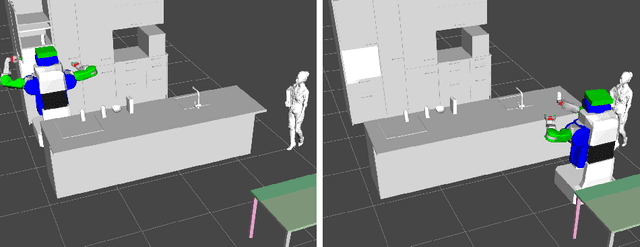
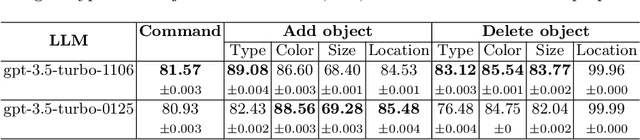
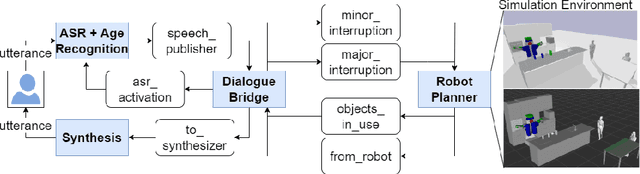
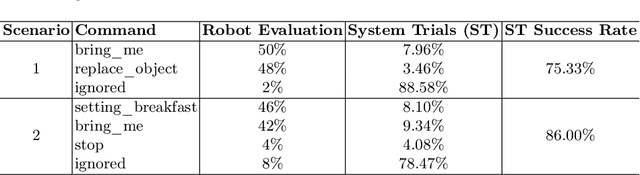
To facilitate natural and intuitive interactions with diverse user groups in real-world settings, social robots must be capable of addressing the varying requirements and expectations of these groups while adapting their behavior based on user feedback. While previous research often focuses on specific demographics, we present a novel framework for adaptive Human-Robot Interaction (HRI) that tailors interactions to different user groups and enables individual users to modulate interactions through both minor and major interruptions. Our primary contributions include the development of an adaptive, ROS-based HRI framework with an open-source code base. This framework supports natural interactions through advanced speech recognition and voice activity detection, and leverages a large language model (LLM) as a dialogue bridge. We validate the efficiency of our framework through module tests and system trials, demonstrating its high accuracy in age recognition and its robustness to repeated user inputs and plan changes.
Shadow Program Inversion with Differentiable Planning: A Framework for Unified Robot Program Parameter and Trajectory Optimization
Sep 13, 2024


This paper presents SPI-DP, a novel first-order optimizer capable of optimizing robot programs with respect to both high-level task objectives and motion-level constraints. To that end, we introduce DGPMP2-ND, a differentiable collision-free motion planner for serial N-DoF kinematics, and integrate it into an iterative, gradient-based optimization approach for generic, parameterized robot program representations. SPI-DP allows first-order optimization of planned trajectories and program parameters with respect to objectives such as cycle time or smoothness subject to e.g. collision constraints, while enabling humans to understand, modify or even certify the optimized programs. We provide a comprehensive evaluation on two practical household and industrial applications.